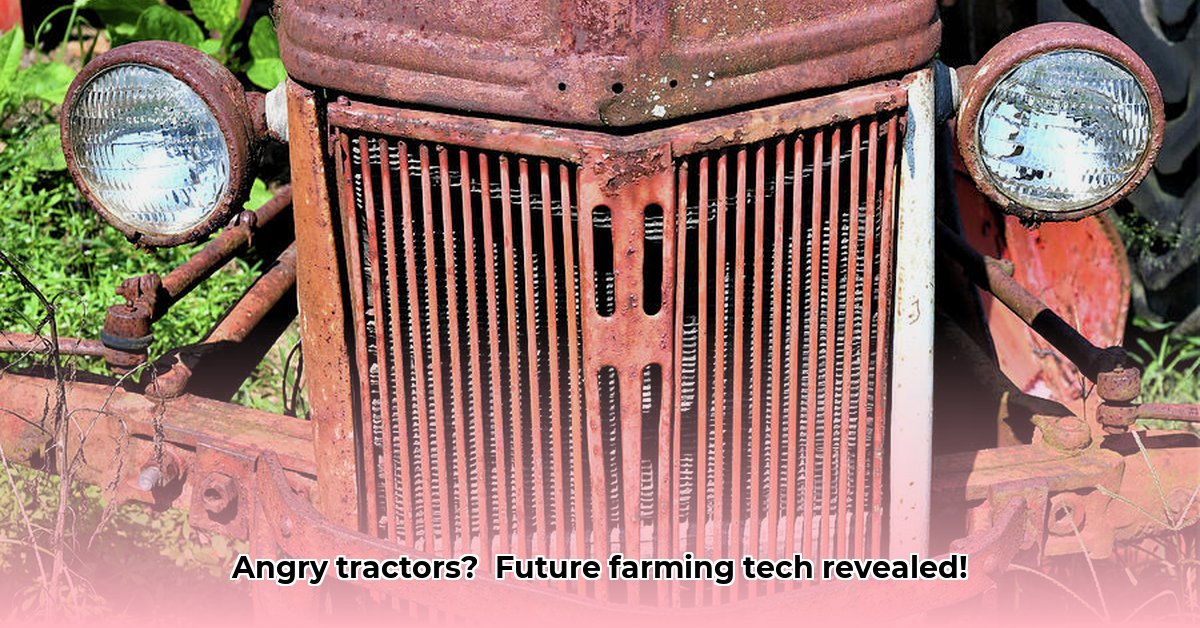
How Do You Know When a Tractor is Angry?
Let's be honest, tractors don't exactly express their emotions like humans do. But the question itself – "How do you know when a tractor is angry?" – highlights the increasingly intimate relationship between farmers and their increasingly sophisticated machinery. It's a humorous starting point for a serious discussion about the technological revolution reshaping agriculture and its impact on sustainability. For example, see this remote controlled tractor.
Giving Machines Human Feelings: Anthropomorphism in the Age of Smart Farming
We're all guilty of it: anthropomorphizing technology. We talk about our "cranky" computers and "stubborn" cars. This tendency is even more pronounced in agriculture, where farmers spend countless hours working alongside their machines. With the advent of GPS-guided tractors, AI-driven planting systems, and robotic harvesters, these machines are no longer mere tools; they're partners. So, when a high-tech piece of equipment malfunctions, it’s not surprising that we might feel like it's throwing a tantrum. This "tractor anger," however, is a symptom of our increased reliance on complex technology in farming.
The Amazing (and Sometimes Concerning) World of Farm Tech
Technological advancements have revolutionized agriculture. GPS guidance systems, for example, minimize fuel waste and crop damage, boosting efficiency. AI-powered systems predict potential equipment failures, leading to preemptive maintenance and minimizing downtime. But this progress comes at a cost. The high price of this sophisticated equipment creates a barrier to entry for many farmers, exacerbating existing inequalities. Moreover, a significant skills gap exists, requiring farmers to adapt and acquire new technical skills to manage these complex systems. Additionally, the environmental impact of these powerful machines – including fuel consumption and emissions – needs careful consideration. Are we truly advancing sustainability, or simply trading one set of challenges for another?
Sustainability: The Environmental Footprint of Progress
Modern farm equipment, while significantly increasing efficiency, often comes with a large carbon footprint. Fuel consumption and emissions from large tractors are substantial environmental concerns. This highlights the urgent need for more sustainable practices, including the exploration of alternative fuels, the design of more energy-efficient machinery, and a focus on extending the lifespan of equipment through robust maintenance. One encouraging trend involves the development of electric tractors, promising significant reductions in greenhouse gas emissions.
The Human Element: Adapting to a Changing Workforce
The automation of farming tasks inevitably raises questions about the future of agricultural labor. While technology promises increased efficiency, concerns around job displacement are legitimate. Retraining programs and initiatives to support farmers in adapting to technological changes are crucial to ensure a just transition. The future of sustainable agriculture requires not just technological innovation, but also a commitment to social equity.
Dr. Emily Carter, Agricultural Economist at the University of California, Davis, emphasizes: "Technological advancements offer tremendous opportunities for increased efficiency and sustainability in agriculture, but we must prioritize proactive strategies that address the potential for job displacement and ensure a smooth transition for farmers."
A Brighter, More Sustainable Future for Farming
The path toward a more sustainable and technologically advanced future in agriculture requires a multi-pronged approach. Here are some critical steps:
- Invest in Farmer Education and Training: Equipping farmers with the necessary technical skills is paramount to successful technology adoption.
- Promote Research and Development of Sustainable Technologies: Focusing on alternative energy sources and environmentally friendly designs for farm equipment is crucial.
- Support Policy Changes that Encourage Sustainable Practices: Government incentives and regulations can drive the adoption of more environmentally conscious farming methods.
- Foster Collaboration between Stakeholders: Open communication and collaboration between farmers, agricultural businesses, researchers, and policymakers are essential for successful implementation of sustainable practices.
This future isn't just about high-tech tractors; it's about creating a farming system that balances technological innovation with environmental responsibility and social equity. The "angry" tractor might eventually be a thing of the past, replaced by a productive and sustainable partnership between humans and technology.